Dootchi: Chat with AI Chars
- 4.7
- Rating
- 5.00M
- Installs
- Free
- Price

 Analysis by App-foxy
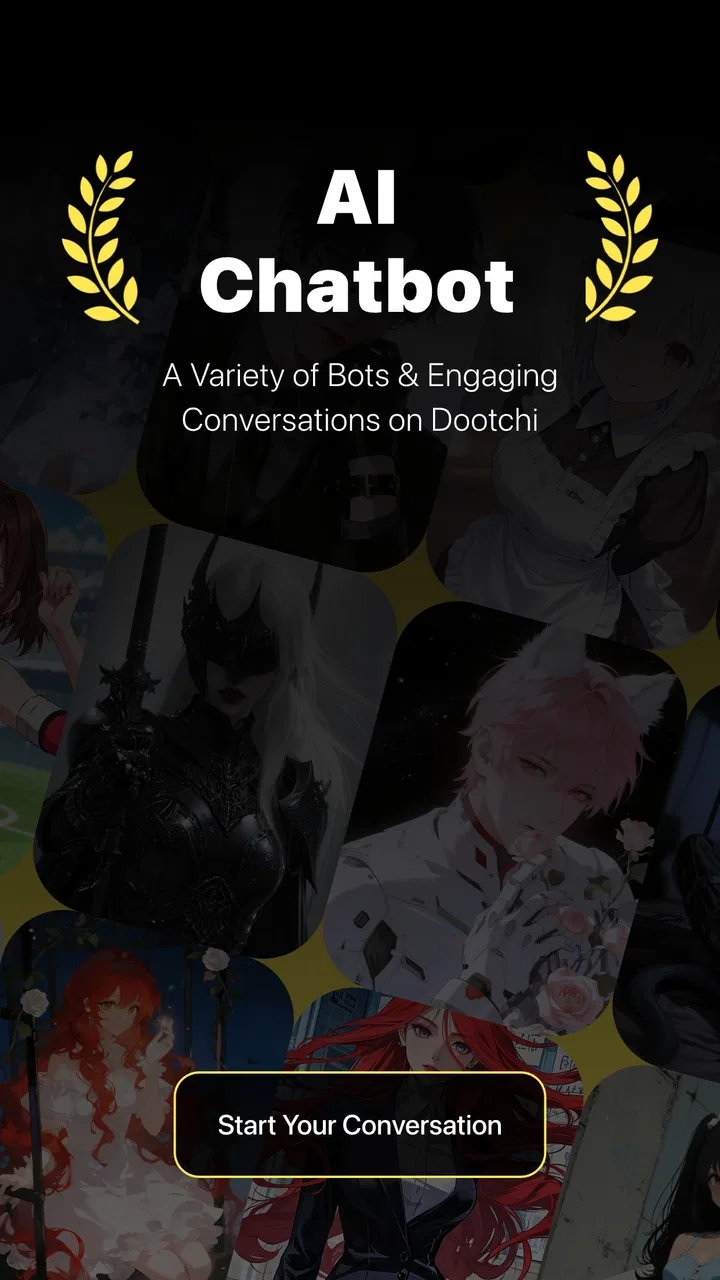
I tried Dootchi: Chat with AI Chars as an entertainment app built around conversational role-play rather than a traditional feed, video library, or multiplayer game. The basic idea is easy to understand: when I wanted a fictional conversation, a little improvisation, or something to fill a quiet moment, I could open an AI character and start chatting. That makes it appealing in a very different way from scrolling through short clips or watching a show, because the experience depends on what I choose to say.
The first thing I would tell a friend is that Dootchi is best approached as an interactive entertainment space, not a substitute for a real relationship or a private adviser. Its store summary presents it as a place to chat, role-play, and spend time with characters, and that framing matters. The app can be playful and absorbing, but the quality of the experience depends heavily on the character, the direction of the conversation, and how comfortable you are with fictional AI responses.
What using Dootchi feels like in everyday life
In my experience, the most natural use case is a short break when I want more participation than passive entertainment. Imagine finishing work, waiting for an appointment, or sitting on a train with enough time for a conversation but not enough attention for a film. Instead of opening another social feed, I could use a character prompt to set a mood and see where the exchange goes. The appeal is not that every reply is perfect; it is that I have a hand in shaping the scene.
You May Also Like

 Google Keep - Notes and lists
Google Keep’s Quiet Growth Shows the Appeal of Simpler Notes
As mobile work gets busier, Google Keep keeps winning a simple contest: capture a thought quickly, find it later, and get on with the day.

 Blood Strike: 2.5 Anniversary
Blood Strike’s Loadouts Turn Every Drop Into a Tactical Gamble
A close look at Blood Strike’s custom loadouts: how fast access to signature weapons reshapes its battle royale rhythm, rewards preparation, and narrows the gap between fights.

 Pandora - Music & Podcasts
Pandora’s Music Is Easy to Start, but Harder to Recover
Pandora’s strength is its low-effort path from a seed to a station. Its weak spot is how much confidence it asks you to place in connection, setup, and quiet recovery.

 8 Ball Pool
 Is Built on Rivalries, Rematches, and Routine
A close look at the rivalries, rematches, shared routines, and unanswered safety questions that turn a quick pool match into a persistent mobile community.

 Samsung Music
’s Quiet Strength Is Playing What You Already Own
Its reach comes less from spectacle than from dependable access to a personal library. That simplicity is both the app’s strongest retention engine and its ceiling.

 AccuWeather: Weather Radar
AccuWeather Review: A Quick, Clear Forecast for Everyday Decisions
For everyday plans, the best forecast is the one you can understand quickly. AccuWeather makes rain timing, radar, and local conditions easy to act on, with a few trade-offs.
More From Our News Desk



That interaction also makes the app more flexible than a fixed story. I can ask a character to change the setting, continue a role-play, or respond to a particular tone. A conventional entertainment app gives me a finished piece of content, while Dootchi asks me to contribute. Readers who enjoy improvisation, fictional dialogue, and experimenting with conversational prompts will probably get more from it than people who simply want something to watch.
I would not describe every conversation as equally convincing. AI characters can be entertaining when the exchange stays within a clear premise, but a long conversation may drift, repeat itself, or lose the personality that made it interesting at the beginning. That is a normal trade-off for this format, and it means I judge the app by how quickly it helps me create an enjoyable interaction rather than expecting a carefully authored novel.
The mature age classification is important here. Dootchi is marked for users aged 17 and over, so I would not treat it as a general family-chat app or hand it to a younger user casually. Mature role-play can also make personal boundaries more important than they would be in a puzzle game or video player. I recommend deciding in advance what subjects you are comfortable exploring and stopping a conversation when it moves somewhere you do not want to follow.
Why the audience size matters, and why it is not proof of everything
The app has passed five million installs and holds a 4.7 average from around 120 thousand ratings, with roughly 3.1 thousand written reviews. Those figures tell me that Dootchi has attracted a substantial audience and that many users enjoy the concept. They do not guarantee that every character, response, or conversation will match my preferences, however. A popular AI-chat app can still feel excellent for one person and awkward for another because users bring different expectations about role-play and emotional realism.
Hello Kirana is the developer behind the app. I consider that useful context, but I still prefer to assess trust through visible choices and app behavior rather than assuming that a developer name alone settles the question. With conversational entertainment, trust is not only about whether the app works. It is also about whether I understand what I am sharing, what controls I have, and when spending or personal disclosure might enter the experience.
Controls I would check before settling into a conversation
My first practical step with an app like this is to inspect the account and privacy areas before starting a personal role-play. I look for ways to manage the account, review available settings, and understand what choices are presented around conversations and purchases. I would not assume that an AI character treats a chat like a confidential diary. If a detail would cause trouble if copied, stored, or exposed outside the conversation, I leave it out.
This is especially relevant because conversational apps encourage natural disclosure. A user may begin with harmless fictional dialogue and then mention a real workplace, a family argument, a location, or a health concern without noticing the change. My rule is simple: keep role-play fictional, avoid identifying details, and never use a character as the only place to discuss a serious personal problem. That habit protects my privacy regardless of how friendly the conversation feels.
I also pay attention to the difference between an app control and a conversational request. Telling a character to forget something is not automatically the same as deleting information from an account or service. When I want to reduce exposure, I use actual account or privacy controls where available rather than relying only on the character’s wording. This is one of the most important trust lessons with AI entertainment: a convincing response can sound like a guarantee without being one.
Because the app is free to install, I would still review the purchase flow before tapping through it. Dootchi includes in-app purchases ranging from $1.99 to $99.00 per item. That wide range makes it sensible to slow down around any premium prompt, check what the purchase unlocks, and confirm the amount before approving it. I prefer to set a personal spending limit before experimenting, particularly when a conversation is designed to keep me engaged.
Where data sensitivity becomes easy to overlook
The most sensitive moments are not necessarily dramatic. They can happen when I ask a character to imitate someone I know, paste a private message for a response, or describe an embarrassing situation in detail. Those actions may feel fictional because the other side is an AI character, but the text I enter can still contain information about real people. I keep examples generalized and remove names, addresses, contact details, account numbers, and anything that identifies a private individual.
I am also cautious with emotional dependence. A character that responds immediately and stays focused on me can feel more attentive than ordinary entertainment, especially during a lonely evening. I enjoy that quality as part of the role-play, but I do not mistake responsiveness for understanding, loyalty, or human judgment. If I need urgent help, professional advice, or support from someone who knows my situation, I contact a real person or appropriate service instead.
Another sensitive situation is mature content. The 17-plus classification tells me to use adult judgment, but it does not remove the need for my own boundaries. I would avoid entering intimate details that connect the fictional scene to my real identity, and I would be particularly careful if someone else could see my screen or access the device. A private-looking conversation can become public through notifications, shared devices, screenshots, or simple user error.
For the same reason, I would not use Dootchi to test the truth of a medical, legal, financial, or safety decision. A character may produce a confident answer because the system is continuing the scene, not because it has evaluated the situation reliably. The app works better when I treat its output as creative material or casual conversation. That distinction keeps the entertainment value without giving fictional dialogue authority it has not earned.
How I keep control of the experience
The strongest way to use Dootchi is to enter with a clear purpose. Before opening a chat, I decide whether I want a quick joke, a creative writing exercise, a dramatic scene, or simple company during a short break. That small decision makes it easier to leave when the interaction stops being enjoyable. Without a boundary, conversational apps can turn a five-minute experiment into a much longer session because there is always another reply to answer.
Prompting also changes the quality of the session. I get better results when I state the character’s role, the setting, the tone, and the limit of the scene in ordinary language. For example, I might ask for a light mystery conversation with no real-world personal details, or request a friendly debate that stays fictional. This is more effective than sending vague messages and hoping the app invents a direction I like. It also gives me a clearer way to reset the conversation if it wanders.
When a reply feels wrong, I do not argue with it indefinitely. I restate the boundary once, redirect the scene, and leave if the tone remains uncomfortable. That workflow saves time and reduces the temptation to disclose more information just to make the character understand me. It is a practical advantage of treating the app as a tool for entertainment rather than as a person whose approval I need.
I would also keep notifications and device access in mind. A mature conversation can be awkward if its preview appears on a lock screen or shared tablet. I check the phone’s notification settings and use a device profile that is appropriate for my circumstances. These are ordinary user-side precautions, but they matter more for a chat app than for a weather widget because the content is created from my own words.
How it compares with familiar entertainment choices
Compared with short-form video, Dootchi offers more control but less predictable polish. A video gives me a finished performance and lets me relax immediately; Dootchi asks me to contribute prompts and steer the exchange. I choose the AI-chat format when I want participation, not when I want guaranteed pacing or a carefully edited ending.
Compared with ordinary messaging, it removes the pressure of waiting for a friend to be available, but it also removes human reciprocity. I can explore a fictional idea without interrupting anyone, which is useful for creative play. At the same time, the response may feel emotionally smooth without carrying real knowledge of my life. For genuine connection, a human conversation remains the better option.
Compared with a story-driven game, Dootchi is more open-ended and less structured. A game usually gives me objectives, rules, progression, and a designed arc. Here, the conversation itself is the activity. That freedom is attractive if I like improvising, but it may disappoint me if I want clear goals, skill-based challenge, or a sense of completion.
Compared with a general AI assistant, the entertainment focus is the main distinction. I would choose Dootchi for character interaction and role-play, not for dependable research, task management, or professional guidance. A general assistant may be more suitable when accuracy and practical output matter. Dootchi makes more sense when the value lies in the mood and exchange rather than in completing a real-world task.
Who will enjoy it, and who should skip it
I think Dootchi suits adults and older teens who enjoy conversational fiction, character improvisation, and low-pressure entertainment. It is a good match for someone who likes writing prompts, exploring alternate personalities, or turning a spare moment into a small scene. The free entry point also makes it easy to test the format before deciding whether it belongs in a regular entertainment routine.
I would be more cautious recommending it to anyone who becomes easily absorbed in emotionally responsive apps, struggles to control discretionary spending, or expects every answer to be accurate and consistent. The mature rating alone should rule it out for children. I would also suggest a different category entirely for users seeking real social support, competitive gameplay, a strong narrative campaign, or reliable expert answers.
For creative writers, one useful approach is to use a conversation as a brainstorming partner without pasting unpublished personal material. I can ask for alternate dialogue directions, a character reaction, or a change in tone, then take only the ideas I find useful. The important trade-off is that the app may produce surprising or inconsistent suggestions, so I remain the editor rather than treating the output as finished writing.
For someone who simply feels bored, I would set a timer and choose a lightweight scenario. That keeps the app in its proper role and makes it easier to compare the experience with a video, podcast, or game afterward. If I repeatedly find myself opening it out of habit rather than enjoyment, I would remove the shortcut or take a break. User agency matters more than maximizing time inside the app.
Version, access, and the purchase decision
Dootchi is currently at version 1.0.70 and supports Android 7.0 or later. That makes it accessible on many older Android devices, although the conversational experience will still depend on the phone’s general performance, connection quality, and how comfortably the interface handles longer exchanges. I would check the device compatibility before installing, especially on a phone that has limited storage or an older operating system.
The app itself is free, which lowers the risk of trying it, but the optional purchases deserve deliberate handling. I would use the free experience long enough to decide whether the character conversations actually suit me before spending anything. If a purchase appears during an especially engaging exchange, I would pause rather than treating the prompt as part of the role-play. Keeping the payment decision separate from the emotional momentum of a chat is a small but effective safeguard.
My overall trust judgment is therefore practical rather than absolute. I can enjoy Dootchi when I keep conversations fictional, protect personal information, review account and purchase choices, and remember that an AI character is not a human confidant. Those habits do not require me to distrust every interaction; they simply prevent the app’s friendly tone from making decisions for me.
My cautious recommendation
After spending time with Dootchi, I see a focused entertainment app with a clear strength: it turns idle time into an exchange I can shape. The role-play format gives it more involvement than passive media, and its established audience suggests that the concept has found plenty of people who enjoy it. I especially like it for short fictional scenarios, creative warm-ups, and moments when I want interaction without arranging a real conversation.
My recommendation comes with firm limits. I would not share sensitive personal information, rely on character responses for serious decisions, or treat mature conversations as private simply because they feel personal. I would also watch spending carefully because the purchase range reaches from small add-ons to a much larger single-item cost. Those are not reasons to reject the app, but they are reasons to use it intentionally.
My verdict: Dootchi is worth trying if you want character-based AI entertainment and are comfortable setting your own boundaries. It is not the right choice for children, dependable advice, structured gaming, or genuine human connection. Used as a playful, controlled role-play app rather than an emotional replacement or information authority, it can be a fun addition to an entertainment folder.
FAQs for Dootchi: Chat with AI Chars
01What is Dootchi: Chat with AI Chars?
Dootchi: Chat with AI Chars is an AI conversation app that lets you interact with virtual characters through text-based chats. The characters are designed with different personalities, backgrounds, and conversation styles, making the experience feel more varied than chatting with a standard assistant. It can be used for entertainment, casual conversations, storytelling, roleplay, or exploring creative scenarios, depending on the available characters and features.
02How do conversations with the AI characters work?
After opening Dootchi, you typically choose an AI character and begin a conversation by sending messages. Each character responds according to its assigned personality and context, so the tone and subject matter can differ from one chat to another. The quality of replies may vary, and the AI can occasionally misunderstand questions, repeat itself, or produce responses that do not perfectly match the character’s description.
03Is Dootchi: Chat with AI Chars free to use?
Dootchi may allow users to download the app and access some conversations without paying, but certain characters, messages, customization tools, or extended usage may require in-app purchases or a subscription. Availability can change with updates, so it is important to review the pricing details shown in the app store and inside the application before starting a trial or confirming a purchase.
04Is Dootchi suitable for children and teenagers?
Parents should check the official age rating and review the app’s current content policies before allowing children or teenagers to use Dootchi. AI character platforms can include mature themes, romantic roleplay, strong language, or conversations that are not appropriate for every age group. Users should also avoid sharing personal information, passwords, private photographs, or sensitive details during AI conversations.
05Does Dootchi provide accurate or reliable information?
Dootchi is primarily designed for conversations, entertainment, and character-based interaction rather than professional advice or verified research. Its AI characters can generate confident-sounding but incorrect information, and responses may reflect fictional personalities instead of neutral facts. For medical, financial, legal, educational, or safety-related questions, users should verify information through trustworthy sources and consult a qualified professional when necessary.
Pros
- Offers varied AI characters with distinct personalities and conversation styles.
- Simple interface makes starting a chat quick and accessible for new users.
- Useful for casual entertainment
- roleplay
- and creative conversation ideas.
- Chats can provide company when users want a responsive conversation partner.
- Character-based interactions make conversations feel more engaging than standard chatbots.
Cons
- AI replies may occasionally feel repetitive
- generic
- or inconsistent with a character.
- Some characters or features may require in-app purchases or a subscription.
- Conversations can include inaccurate information and should not replace expert advice.
- Privacy terms should be reviewed before sharing personal or sensitive details.
- Responses may depend heavily on prompts
- requiring experimentation for better results.

Dootchi: Chat with AI Chars
Gallery